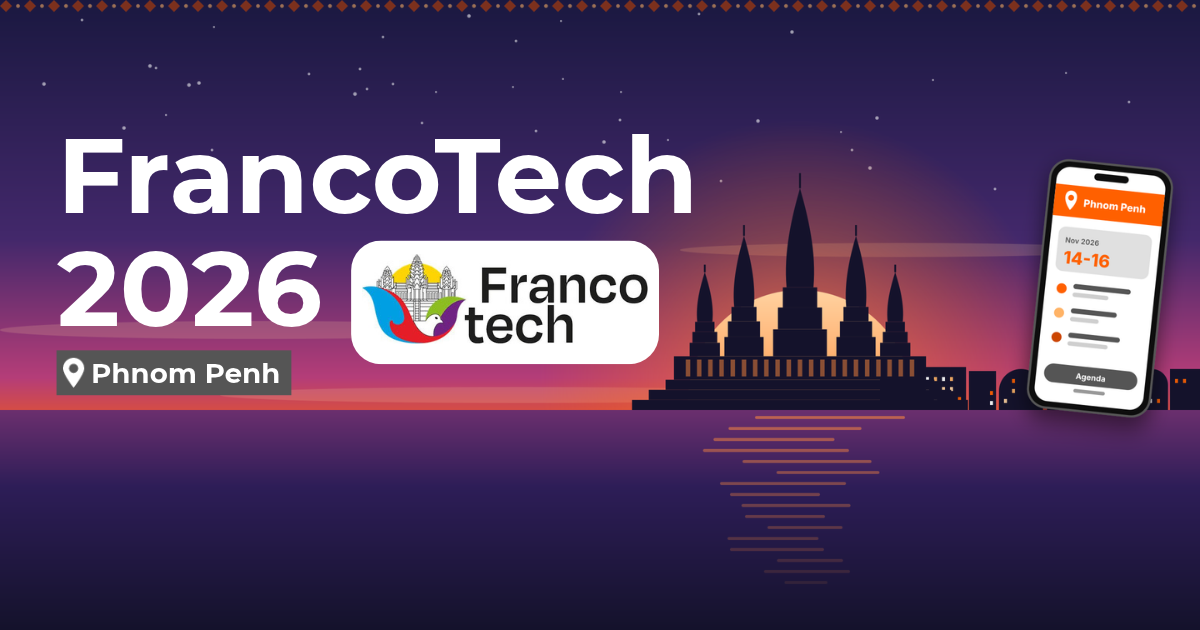
From November 14 to 16, 2026, Phnom Penh hosts FrancoTech 2026, the Francophone innovation exhibition held alongside the 20th Francophonie Summit. It brings together 90 states and governments, more than 200 international exhibitors and more than 5,000 visitors at the Koh Pich Convention Center. BetterTable is part of the Canadian delegation. Here is what FrancoTech is, who will be there and why it matters, even if you never set foot in Cambodia.
What is FrancoTech?

FrancoTech is the economic and technology arm of the Francophonie Summit. The first edition took place in France in 2024 and produced more than 1,000 business meetings in two days. This second edition is hosted by Cambodia and organized by its Ministry of Post and Telecommunications with the Ministry of Women's Affairs. The theme: "One Francophone community, one digital future."
On site: an innovation village, roundtables, investment sessions and B2B meetings. An innovation competition gives two awards, Best Digital Innovation and Best Women Technopreneurs. The final and the awards ceremony take place on November 15.
Technology, tourism and culture, agritech and AI
The program has seven themes. Three of them speak directly to our industry and to the future of the Francophone economy.
Technology for tourism and culture. Modernizing tourism and culture, enriching the visitor experience, and opening investment and cooperation opportunities for sustainable development and regenerative tourism.
AgriTech and food security. Using technology to increase agricultural productivity, processing and supply chain traceability, in order to guarantee food security and reduce food waste.
AI opportunities and governance. This is the opening session. It looks for a balance between AI innovation and risk management, with legal frameworks and ethical codes suited to developing countries, to protect privacy and culture.
The other four themes: digital government, FinTech and financial inclusion, EdTech and human capital, and women in innovation.
How many countries take part?
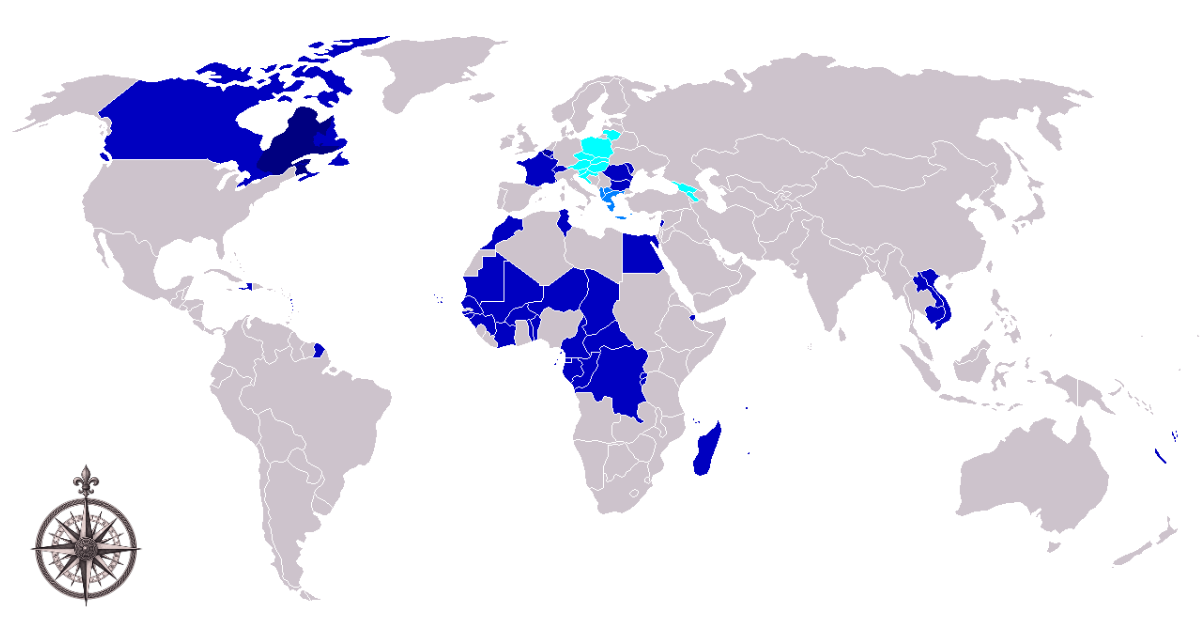
90 states and governments: 53 members, 5 associate members and 32 observers. Together, the Francophonie represents about 1.4 billion people, 396 million French speakers, nearly 16.5% of world GDP and 20% of world trade [1].
Not all 90 are French-speaking. Several members and observers are in Europe, Latin America and the Middle East and take part for political and economic reasons. Here are the Francophone ones. Some entries are regional governments. Canada appears through five governments: Canada, Quebec, Ontario, New Brunswick and Nova Scotia.
French is an official or co-official language in the following countries: Belgium, Benin, Burundi, Cameroon, Canada, Central African Republic, Comoros, Congo, Côte d'Ivoire, Djibouti, France, French Polynesia, New Caledonia, Gabon, Guinea, Equatorial Guinea, Haiti, Louisiana, Luxembourg, Madagascar, Monaco, Democratic Republic of the Congo, Rwanda, Senegal, Seychelles, Switzerland, Chad, Togo and Vanuatu.
French is also widely used in Lebanon, Morocco, Mauritius, Mauritania and Tunisia. Cambodia, Laos and Vietnam also have historic ties to French in Southeast Asia.
What Canada's ambassador says
In a recent interview, Canada's ambassador to Cambodia, Christian Deroche, described the Summit as a chance to rediscover the country. He expects many Canadian companies to attend and said education partnerships, including one with the University of Ottawa, will be signed.
He sees openings for Canadian companies in financial services, clean energy, education and agriculture. He also named the ASEAN-Canada free trade negotiations as a priority. Canada has reopened a full embassy in Phnom Penh and is strengthening its diplomatic presence in the region through its Indo-Pacific strategy.
Why it matters, even if you are not going
Canada's reach. Five Canadian governments sit at the table, and a delegation of Canadian businesses travels with the Council of Ministers on Canadian Francophonie. It is a rare chance to measure Canada's weight in a market we rarely follow.
A door to ASEAN. Cambodia presents itself as an entry point to Southeast Asian markets. Francophone companies are well received there.
AI rules are being written now. The questions raised in the opening session will influence how AI is regulated across 90 governments.
Canada is the next host. The 21st Francophonie Summit will be held in the Ottawa-Gatineau region in 2028. What happens in Phnom Penh this November is a preview of what Canadian businesses can expect at home. Better to start watching now.
Tourism and food. Hotels, restaurants and food waste sit right where tourism and agritech meet.
Meet us on November 15 at SOMA Hotel Riverside
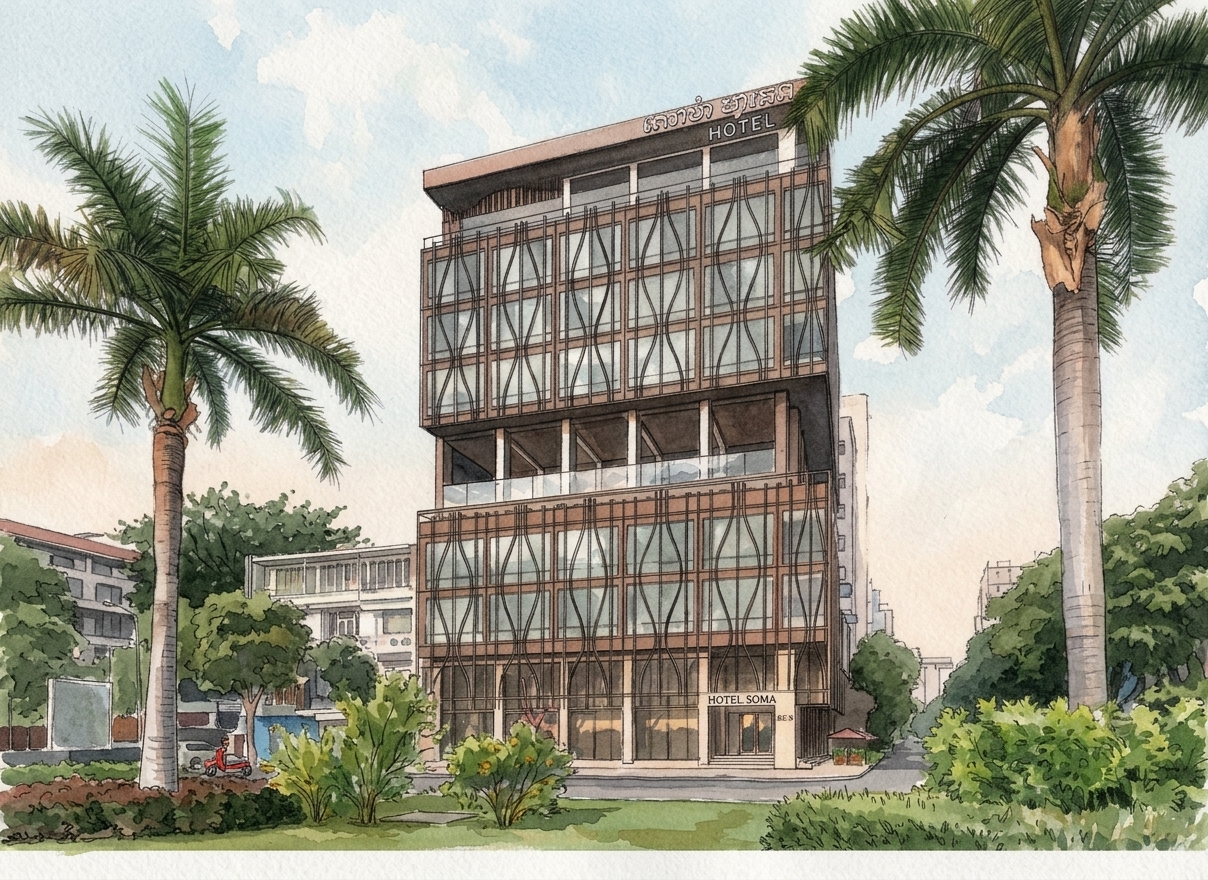
On Sunday, November 15, the REF (Rencontre des Entrepreneurs Francophones) takes place at SOMA Hotel Riverside. If you are in Phnom Penh, come join us.
SOMA is a good example of where Cambodian hospitality is heading on sustainability. The hotel is working toward Green Key certification. In the kitchen, chefs turn ingredients close to spoilage into staff meals and bar creations, such as cocktails and bitters. There is still no eco-directory in Cambodia that lists hotels doing this kind of work.
FrancoTech 2026: quick answers
When is FrancoTech 2026? November 14 to 16, 2026.
Where? Koh Pich Convention Center, Phnom Penh, Cambodia.
How many countries take part? 90 Francophonie states and governments are represented: 53 members, 5 associate members and 32 observers.
What is on the program? An innovation village, roundtables, investment sessions, B2B meetings and an innovation competition. Seven themes, from AI governance to tourism and culture.
BetterTable helps hotels, restaurants and tourism operators improve profitability and cut food waste in half. Learn more at bettertable.com.
Sources
[1] FrancoTech 2026 participation and exhibition manual (Francophonie map and figures), published by the Council of Ministers on Canadian Francophonie, cmfc-mccf.ca.
About the author
The BetterTable team combines expertise in food sustainability, hospitality operations, and technology to help the industry achieve the triple bottom line: people, planet, and profit.
Ready to audit sustainability and reduce costs?
Start your free 14-day trial and your first food sustainability audit today.
Start Free Trial